
MDS/MPN (Myelodysplastic/Myeloproliferative Neoplasms) are rare and complex blood disorders that affect the bone marrow’s ability to produce healthy blood cells. These conditions share features of both myelodysplastic syndromes (ineffective blood cell production) and myeloproliferative neoplasms (overproduction of abnormal blood cells).
India has become a preferred destination for MDS/MPN treatment for patients worldwide. With access to experienced hematologists, advanced molecular diagnostics, and internationally accredited hospitals, India offers comprehensive care at significantly lower costs compared to many Western countries—without compromising on medical quality.
What is MDS/MPN?
MDS/MPN is a group of rare bone marrow disorders characterized by both defective blood cell production (as seen in myelodysplastic syndromes) and excessive production of abnormal blood cells (as seen in myeloproliferative neoplasms).
In these conditions, the bone marrow produces blood cells that are often abnormal, leading to anemia, low platelets, or dysfunctional white blood cells. At the same time, there may be an overgrowth of certain blood cell lines, causing enlarged spleen, increased risk of clotting, or progression to acute leukemia.
MDS/MPN disorders are considered clonal stem cell diseases, meaning they arise from genetic mutations in bone marrow stem cells. These mutations disrupt normal blood formation and lead to chronic disease progression.
The exact cause is usually unknown, but factors such as age, previous chemotherapy or radiation, environmental exposures, and acquired genetic mutations may increase risk.
MDS/MPN primarily affects older adults, though younger patients may also develop it. While these disorders are typically chronic, early diagnosis and personalized treatment can control symptoms, slow disease progression, and significantly improve quality of life.
Types of MDS/MPN
MDS/MPN includes a group of overlapping disorders classified based on clinical features, blood counts, and genetic abnormalities.
Chronic Myelomonocytic Leukemia (CMML)
CMML is the most common form of MDS/MPN. It is characterized by persistent monocytosis (high monocyte count), anemia, and splenomegaly. Treatment depends on risk category and may include supportive care, hypomethylating agents, or bone marrow transplant in eligible patients.
Atypical Chronic Myeloid Leukemia (aCML)
aCML is a rare and aggressive disorder marked by high white blood cell counts with abnormal immature cells. Unlike classic CML, it does not have the BCR-ABL mutation. Management includes cytoreductive therapy, targeted agents, and in selected cases, stem cell transplant.
MDS/MPN with Ring Sideroblasts and Thrombocytosis (MDS/MPN-RS-T)
This subtype presents with features of both MDS and essential thrombocythemia, including anemia with ring sideroblasts and elevated platelet counts. Treatment focuses on symptom control, anemia management, and prevention of thrombotic events.
MDS/MPN, Unclassifiable (MDS/MPN-U)
Some patients show overlapping features that do not fit clearly into any specific category. These cases are classified as MDS/MPN-U and require individualized treatment based on clinical behavior and genetic findings.
What is the Treatment Protocol for MDS/MPN?
Treatment of MDS/MPN is highly individualized and depends on disease subtype, genetic mutations, symptom burden, risk of progression, and patient fitness. The primary goals are to control blood counts, relieve symptoms, prevent complications, and delay transformation to acute leukemia.
Step 1: Diagnostic Evaluation
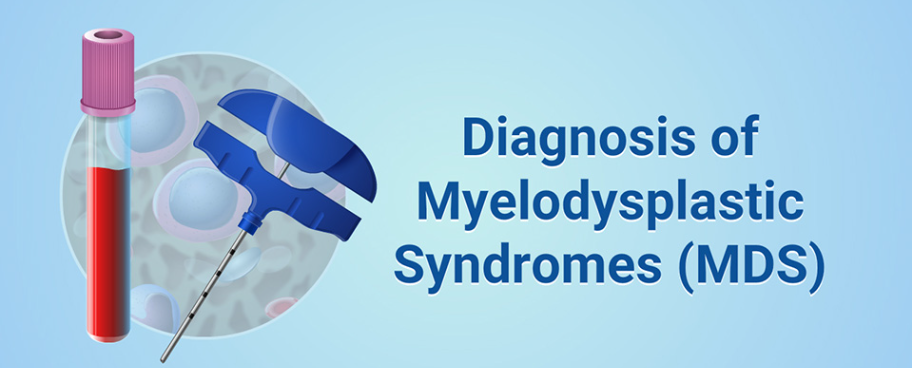
Diagnosis begins with blood tests, bone marrow examination, and molecular analysis.
Doctors start with a complete blood count (CBC) and peripheral smear to assess abnormalities in red cells, white cells, and platelets. A bone marrow aspiration and biopsy confirms dysplasia, cellularity, and fibrosis.
Flow cytometry helps assess abnormal cell populations, while cytogenetic and molecular testing identifies mutations such as TET2, ASXL1, SRSF2, SETBP1, and JAK2, which guide prognosis and treatment selection.
Imaging studies may be performed to evaluate splenomegaly or organ involvement. If transplantation is being considered, HLA typing is performed early to identify potential donors.
Step 2: First-Line Treatment by MDS/MPN Subtype
Treatment depends on the clinical behavior of the disease, ranging from supportive care to disease-modifying therapy.
Chronic Myelomonocytic Leukemia (CMML)
- Supportive Care: Blood transfusions, iron chelation, and growth factors for anemia.
- Hypomethylating Agents: Drugs such as Azacitidine or Decitabine are used to control disease and delay progression.
- Cytoreductive Therapy: Hydroxyurea may be used to reduce high white cell counts and splenomegaly.
Atypical CML (aCML)
- Cytoreduction: Hydroxyurea to control elevated white cell counts.
- Targeted Therapy: Selected patients may benefit from mutation-directed treatment.
- Transplant Evaluation: Younger or high-risk patients may be referred for allogeneic stem cell transplant.
MDS/MPN-RS-T
- Anemia Management: Erythropoiesis-stimulating agents or transfusions.
- Thrombosis Prevention: Low-dose aspirin or cytoreductive therapy for high platelet counts.
MDS/MPN-Unclassifiable
- Individualized Therapy: Treatment based on dominant clinical features and genetic risk.
Step 3: Bone Marrow or Stem Cell Transplant
Allogeneic stem cell transplant is currently the only curative option for MDS/MPN. It is considered in younger patients or those with high-risk disease.
- Indications:
- High-risk CMML
- Progressive or aggressive aCML
- Transformation toward acute leukemia
- Types of Transplant:
- Matched sibling donor
- Matched unrelated donor
- Haploidentical donor
Post-transplant care focuses on infection prevention, graft-versus-host disease management, and long-term disease monitoring.
Factors Affecting MDS/MPN Treatment Costs in India
The cost of treating MDS/MPN in India varies depending on multiple medical and logistical factors.
- Disease Subtype and Risk Level: Higher-risk CMML or aggressive aCML often requires more intensive treatment.
- Type of Therapy: Supportive care is less expensive, while hypomethylating agents, targeted drugs, and transplant increase costs.
- Hospital and City: Major metropolitan centers may charge more due to infrastructure and expertise.
- Duration of Treatment: Chronic therapy over months or years impacts long-term expenses.
- Need for Transplant: Stem cell transplantation significantly increases treatment cost.
Why Is MDS/MPN Treatment More Affordable in India?
India offers advanced hematology care at significantly lower costs due to reduced infrastructure expenses, availability of high-quality generics, and highly trained specialists.
- Lower Hospital Operating Costs
- Access to Affordable Generic Medications
- Experienced Hematologists and Transplant Specialists
- Standardized International Treatment Protocols
- Comprehensive Medical Tourism Support
Affordable, Expert Care for MDS/MPN in India
MDS/MPN are rare and complex disorders that require specialized hematology expertise. India offers world-class diagnostic facilities, modern treatment protocols, and affordable transplant options.
At our institute, Dr. Ganesh Jaishetwa provides personalized care using evidence-based international guidelines. Patients from across the world trust his experience in managing rare bone marrow disorders with precision and compassion.
Choosing India for MDS/MPN treatment ensures access to expert care, advanced technologies, and cost-effective solutions without compromising outcomes.
Patient Testimonials – MDS/MPN Treatment in India
"My CMML Is Now Under Control" – Joseph M., Uganda
I was diagnosed with CMML and was told there was limited treatment in my country. Under Dr. Ganesh Jaishetwa’s care in India, I started Azacitidine therapy and today my counts are stable. The care and affordability changed my life.
"Successful Transplant for aCML" – Rakesh S., India
After being diagnosed with atypical CML, Dr. Jaishetwa recommended a transplant. The entire process was well-managed, and today I am disease-free. I am grateful for the expert treatment I received.
Frequently Asked Questions
MDS/MPN refers to a group of rare bone marrow disorders with overlapping features of myelodysplastic syndromes and myeloproliferative neoplasms.
Most cases are managed as chronic conditions. However, selected high-risk patients may be cured with allogeneic stem cell transplantation.
Yes. India offers advanced transplant facilities for eligible MDS/MPN patients at significantly lower costs compared to Western countries.
Treatment duration varies. Some patients require long-term therapy, while others may proceed to transplant depending on disease severity.
